Everything About Cats
Everything You Need to Know About Cats Contents

EVERYTHING YOU NEED TO KNOW ABOUT CATS

The Complete Beginner's Guide to Raising a Happy, Healthy Cat

A practical handbook for first-time cat owners

EVERYTHING YOU NEED TO KNOW ABOUT CATS

The Complete Beginner's Guide to Raising a Happy, Healthy Cat

A practical handbook for first-time cat owners

Written by

Contents

  1. IntroductionWelcome to the World of Cats!2
  2. Chapter 1Understanding Cats3
  3. Chapter 2Choosing the Right Cat8
  4. Chapter 3Preparing Your Home13
  5. Chapter 4Bringing Your Cat Home17
  6. Chapter 5Feeding and Nutrition22
  7. Chapter 6Litter Training and Toilet Habits29
  8. Chapter 7Grooming and Hygiene35
  9. Chapter 8Understanding Cat Behaviour41
  10. Chapter 9Health, Vaccinations and Veterinary Care48
  11. Chapter 10Raising Kittens55
  12. Chapter 11Keeping Indoor Cats Happy and Safe61
  13. Chapter 12Common Mistakes Every New Cat Owner Should Avoid67
  14. Bonus 1The First-Time Cat Owner Checklist78
  15. Bonus 2A Simple Daily Cat Care Routine82
  16. Bonus 3What to Do in a Cat Emergency86
  17. Final WordYour Journey as a Cat Owner Starts Here87

Copyright and Disclaimer

Copyright © 2026. All rights reserved.

This guide is for educational purposes. It is not a replacement for professional veterinary advice, diagnosis or treatment. Every cat is different, and its care requirements may depend on age, health, environment and lifestyle.

Never give your cat human medication or attempt to treat a serious illness using advice from the internet. Contact a qualified veterinarian whenever you are concerned about your cat's health.
Copyright and Disclaimer1

INTRODUCTION

Welcome to the World of Cats!

Bringing a cat into your home can be one of the most rewarding experiences of your life.

Cats are curious, playful, intelligent and independent animals. Some love sitting on their owner's lap for hours, while others prefer watching everything from a comfortable corner. Some follow their owners around the house, while others enjoy having their own space.

But owning a cat involves more than providing food and a comfortable place to sleep.

Your cat depends on you for its safety, nutrition, hygiene, healthcare and emotional well-being. Understanding these responsibilities before bringing a cat home can make the experience easier for both of you.

This book was created for people who are getting their first cat or have recently welcomed one into their home.

You do not need to be an expert. You simply need the right information, patience and willingness to learn.

By the end of this guide, you will understand how to:

  • Choose a cat that suits your lifestyle.
  • Prepare your home before bringing a cat inside.
  • Feed your cat properly.
  • Teach your cat to use a litter box.
  • Understand common cat behaviours.
  • Maintain your cat's hygiene.
  • Recognise signs of illness.
  • Keep your cat safe, active and comfortable.

Let's begin!

Introduction · Welcome to the World of Cats!2

CHAPTER 1

Understanding Cats

Before learning how to care for a cat, it helps to understand how cats think and behave.

Cats are not small dogs. They have different instincts, communication styles and needs.

Chapter 1 · Understanding Cats3

1.1 Cats Are Independent, But They Still Need Attention

Cats are often described as independent animals. This is partly true.

Many cats can entertain themselves for short periods, sleep for several hours and enjoy spending time alone. However, independence does not mean they should be ignored.

Cats need regular interaction, playtime, affection and mental stimulation.

Some cats enjoy being carried, while others dislike it. Some enjoy sleeping beside their owners, while others prefer their own sleeping areas.

The important thing is to learn your cat's personality rather than forcing it to behave in a particular way.

Chapter 1 · Understanding Cats4

1.2 Cats Communicate Through Their Bodies

Cats communicate using sounds, facial expressions, tail movements and body posture.

Here are some common signals:

Tail held upright: Often indicates confidence, friendliness or a positive greeting.

Slow blinking: Can indicate relaxation and trust. Try slowly blinking back when your cat looks comfortable.

Flattened ears: May indicate fear, irritation or aggression.

Puffed-up tail: Usually indicates that the cat feels frightened, threatened or highly excited.

Hiding: A cat may hide because it feels nervous, overwhelmed, unwell or simply wants privacy.

Rubbing against your legs: Often a friendly greeting and a way of leaving its scent.

Remember that body language must be interpreted in context. One signal alone does not always tell the whole story.

Chapter 1 · Understanding Cats5

1.3 Why Do Cats Sleep So Much?

Cats generally sleep or rest for a large part of the day. Their sleep patterns are influenced by their natural hunting instincts.

They are often most active around dawn and dusk.

Do not automatically assume that a sleeping cat is lazy or sick. Resting is normal. However, an unusual increase in sleep combined with poor appetite, weakness or other changes deserves attention.

Chapter 1 · Understanding Cats6

1.4 Cats Need Their Own Space

A cat should have somewhere quiet where it can rest without being disturbed.

This could be a comfortable bed, a cardboard box or a quiet corner with a soft blanket.

Avoid forcing your cat to interact with visitors, children or other animals when it wants to retreat.

Remember: A comfortable cat is one that feels safe enough to choose when it wants attention and when it wants privacy.

Chapter 1 · Understanding Cats7

CHAPTER 2

Choosing the Right Cat

Choosing your first cat is an important decision. Do not choose an animal based only on its appearance.

Consider its age, personality, health and the amount of time you can dedicate to it.

Chapter 2 · Choosing the Right Cat8

2.1 Kitten or Adult Cat?

There are advantages to both.

Kittens

Kittens are young, energetic and curious. Watching them grow can be a wonderful experience.

However, they require more supervision, frequent meals, socialisation, playtime and veterinary attention.

They may also need help learning household routines.

Adult cats

Adult cats often have more established personalities. You may have a better idea of whether they are playful, quiet, affectionate or independent.

Many adult cats are already familiar with litter boxes and household routines.

For a busy first-time owner, an adult cat may be an easier starting point.

Chapter 2 · Choosing the Right Cat9

2.2 Male or Female?

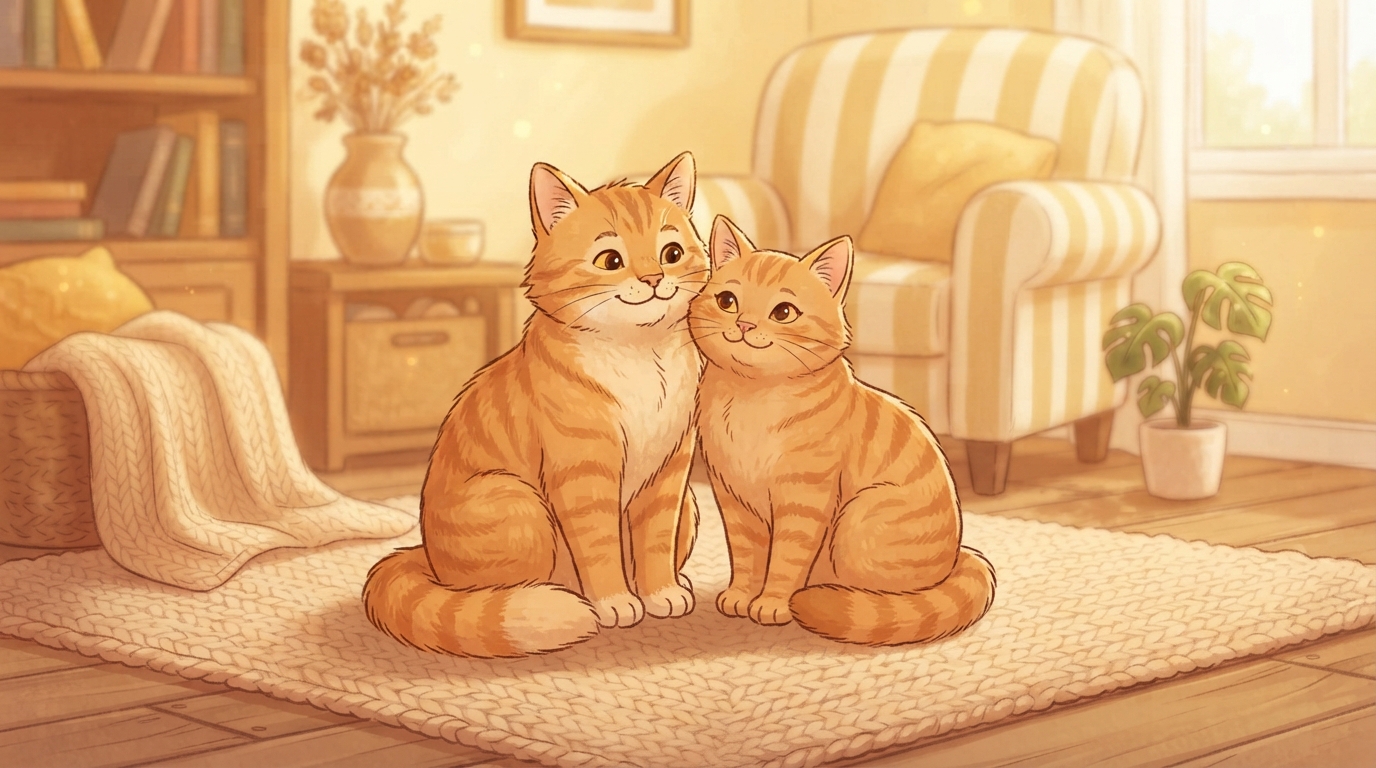
A male and a female cat sitting together on a rug, similar size, relaxed and friendly.

Both male and female cats can make excellent pets.

Personality is generally more important than sex when choosing a companion.

Unneutered male cats may be more likely to roam and mark territory. Unspayed female cats experience heat cycles and can become pregnant.

Discuss spaying or neutering with a veterinarian.

Chapter 2 · Choosing the Right Cat10

2.3 Choosing a Healthy Cat

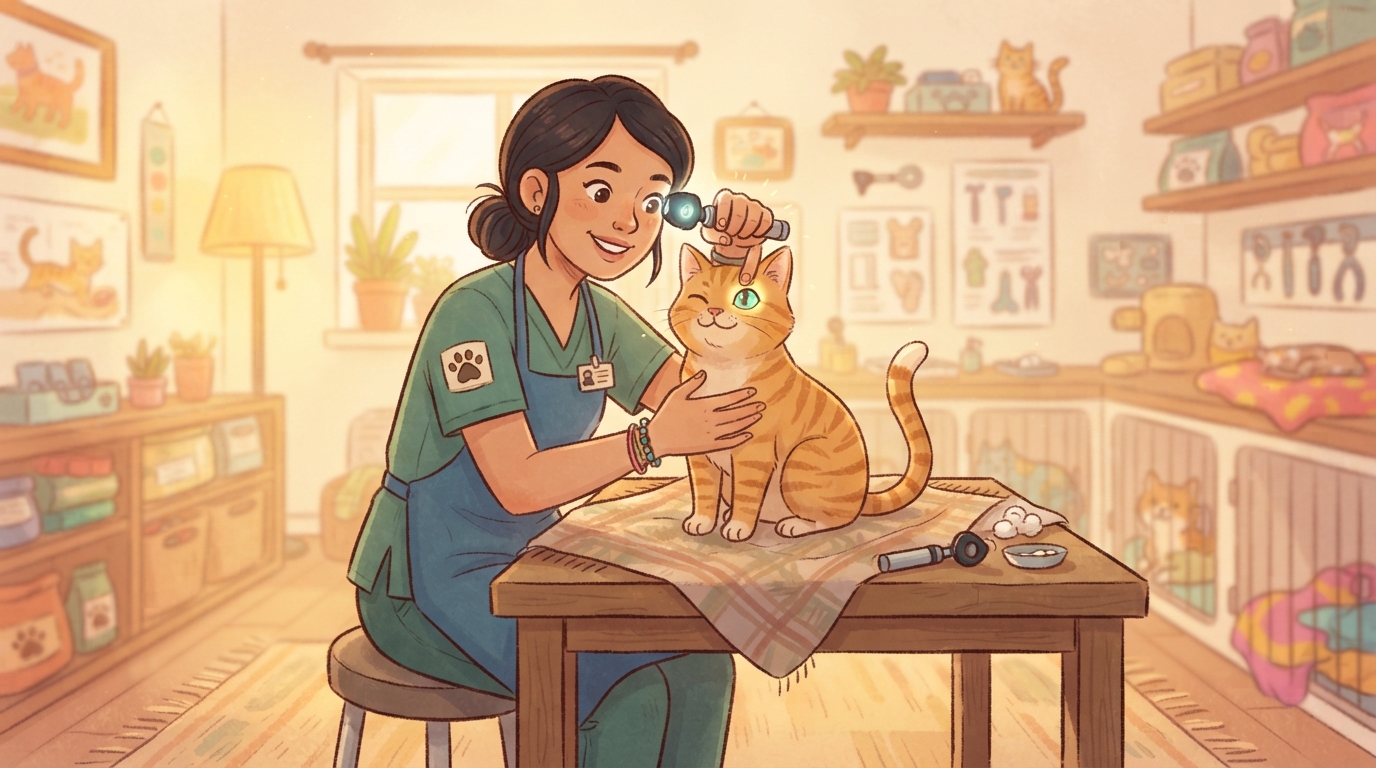
A person gently checking a cat's bright, clear eyes at an animal shelter.

When meeting a potential cat, observe its general condition.

Look for:

  • Clear, bright eyes.
  • Clean ears without unusual discharge.
  • A reasonably clean nose.
  • A coat without extensive bald patches.
  • Comfortable movement.
  • Normal alertness and responsiveness.
  • No obvious breathing difficulty.

A cat that appears weak, struggles to breathe or has persistent discharge should receive veterinary attention.

A healthy-looking appearance does not guarantee that an animal is free from disease.

Ask the previous owner, shelter or breeder about:

  • Previous vaccinations.
  • Deworming and parasite treatment.
  • Medical history.
  • Current food.
  • Age and previous living conditions.
  • Whether the cat has been spayed or neutered.

If possible, adopt through a reputable animal shelter or responsible rescue organisation.

Chapter 2 · Choosing the Right Cat11

2.4 Consider Your Lifestyle

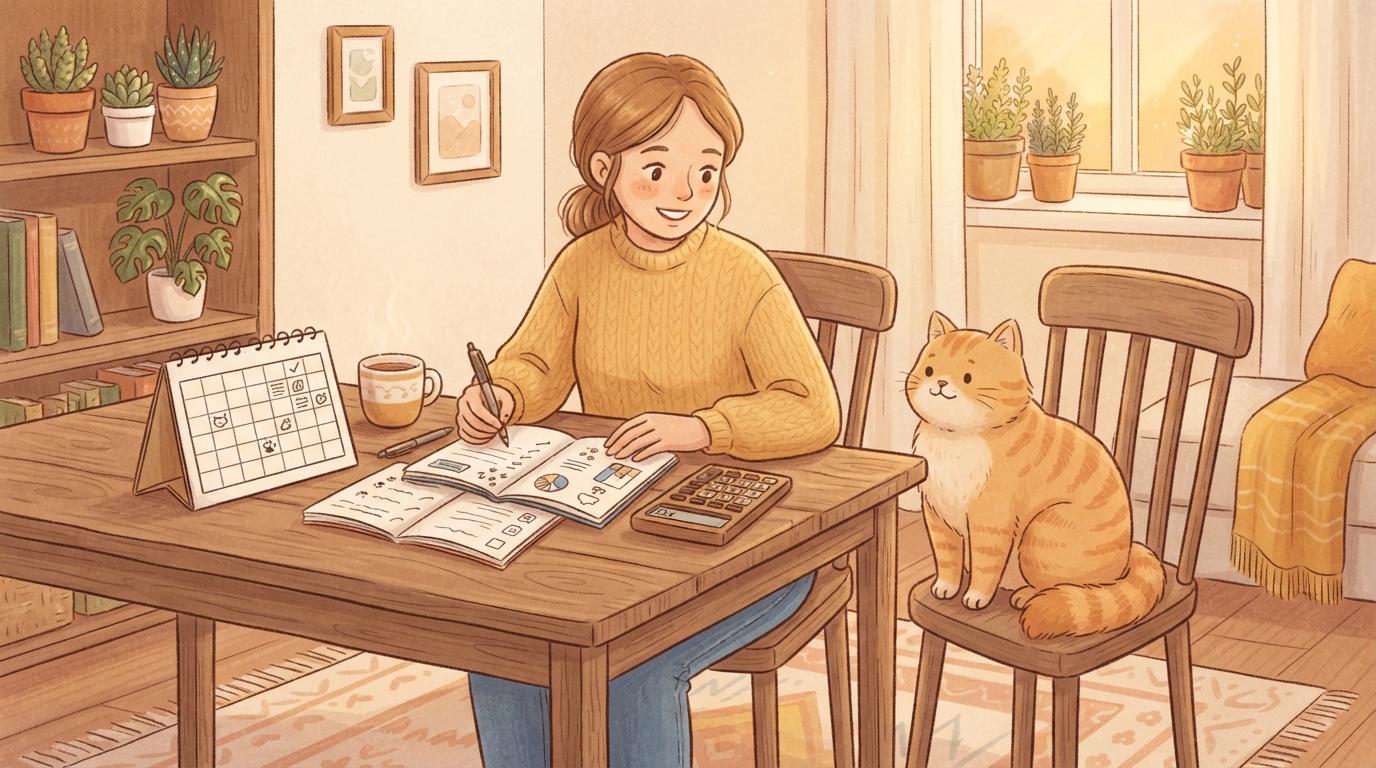
A person at a table with a calendar, notebook and calculator, a cat sitting on the chair beside them.

Before choosing a cat, ask yourself:

  • Can I afford regular food and veterinary care?
  • Can I spend time playing with and caring for it?
  • Is my home safe for a cat?
  • Can I provide care when travelling?
  • Are other household members comfortable with having a cat?

A cat is a long-term responsibility. Many cats live well into their teens, and some live longer.

Do not bring one home unless you are prepared for that commitment.

Chapter 2 · Choosing the Right Cat12

CHAPTER 3

Preparing Your Home

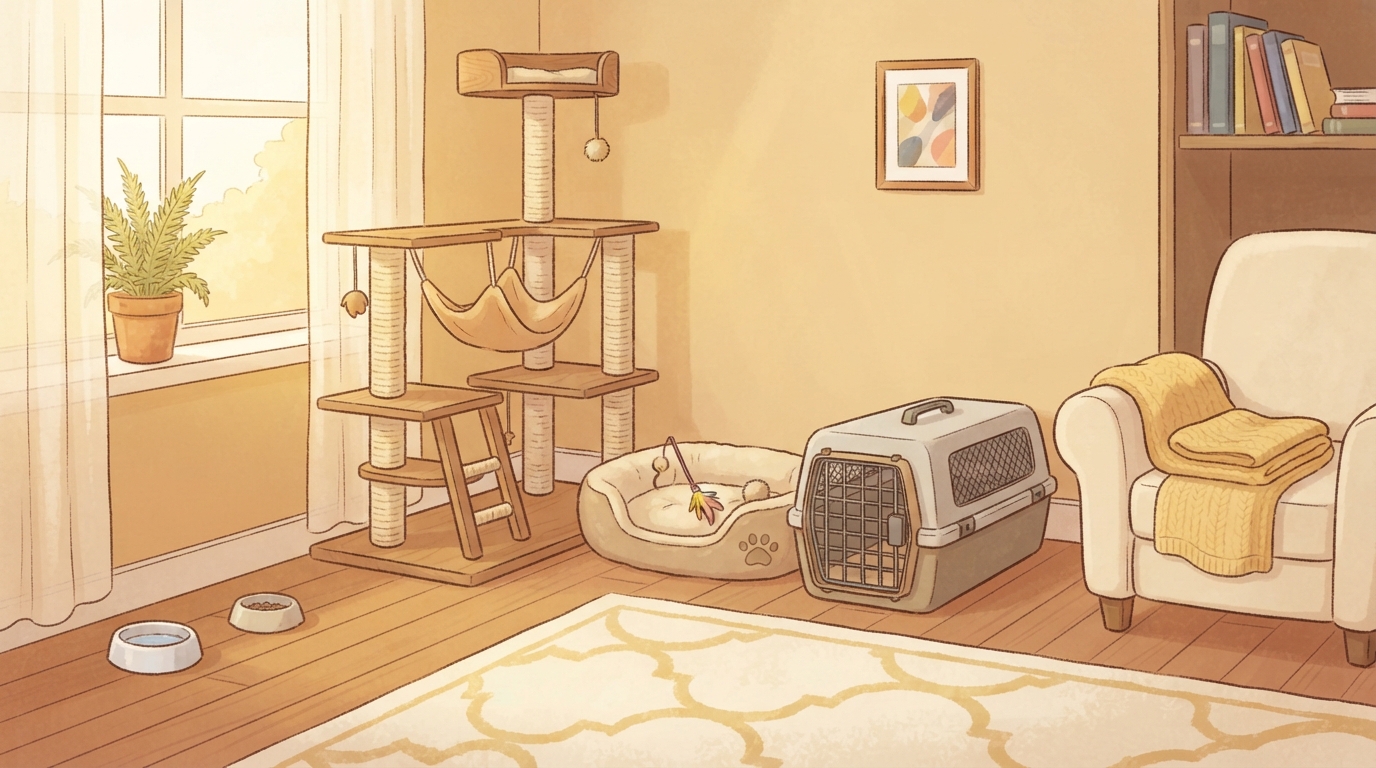
A tidy empty living room being prepared for a cat, with a cat tree and a carrier waiting in the corner.

Your home should be ready before your cat arrives.

A new environment can be frightening, especially for a kitten or a cat that has never lived indoors.

Preparing a safe space helps your cat adjust more comfortably.

Chapter 3 · Preparing Your Home13

3.1 Essential Supplies

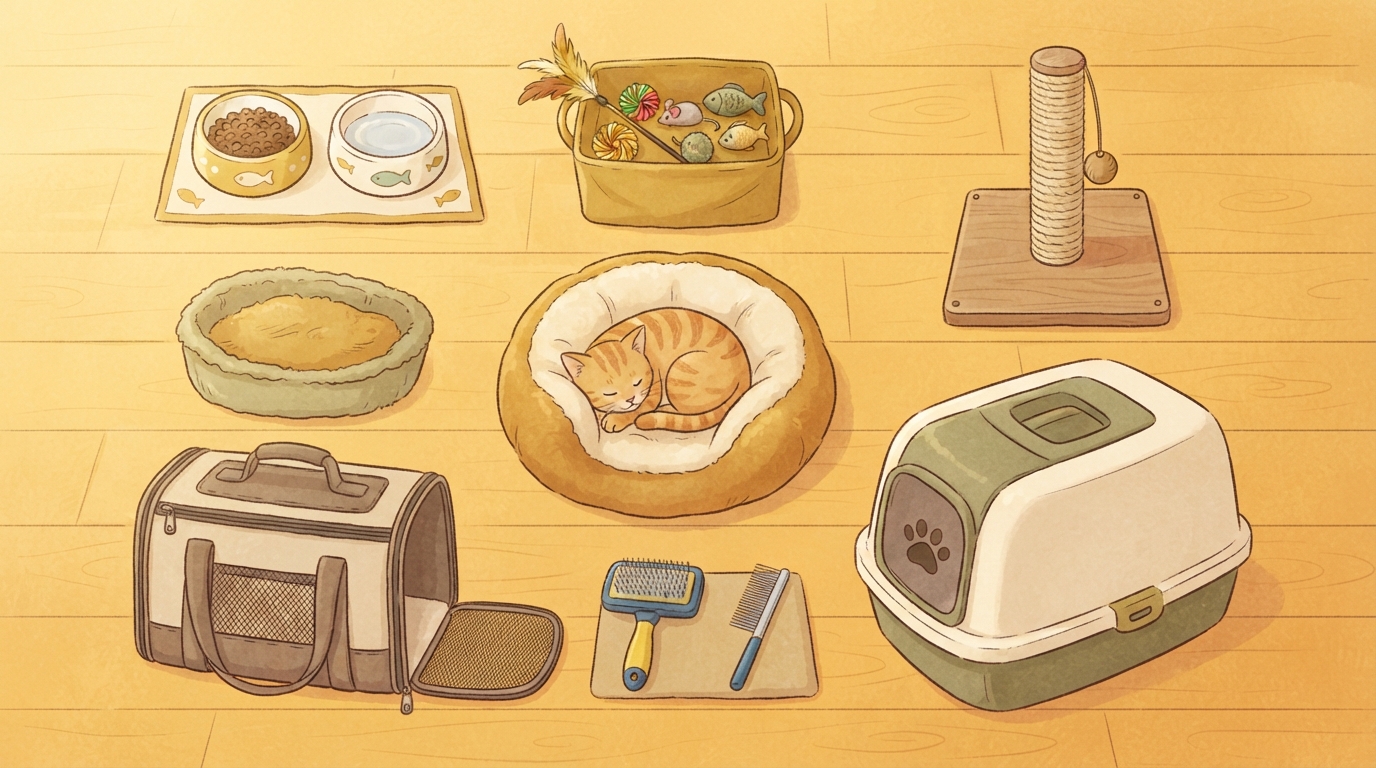
Overhead flat lay of cat essentials: food and water bowls, litter box, scratching post, carrier, bed and toys.

You do not need to buy every expensive cat accessory. Start with the basics.

Food and water bowls

Provide separate bowls for food and water. Wash them regularly and keep fresh water available.

Cat food

Choose nutritionally complete food appropriate for your cat's age and health.

Litter box

Every indoor cat needs access to a clean litter box.

Cat litter

Choose a suitable litter that your cat can comfortably use. Unscented litter is a good starting point.

Scratching post

Cats naturally scratch to maintain their claws, stretch and mark their territory.

A scratching post can help protect your furniture.

Cat carrier

A secure carrier is essential for transporting your cat to veterinary appointments.

Bedding

A soft blanket or comfortable bed gives your cat somewhere to rest.

Toys

Simple toys can provide exercise and mental stimulation.

Chapter 3 · Preparing Your Home14

3.2 Make Your Home Safe

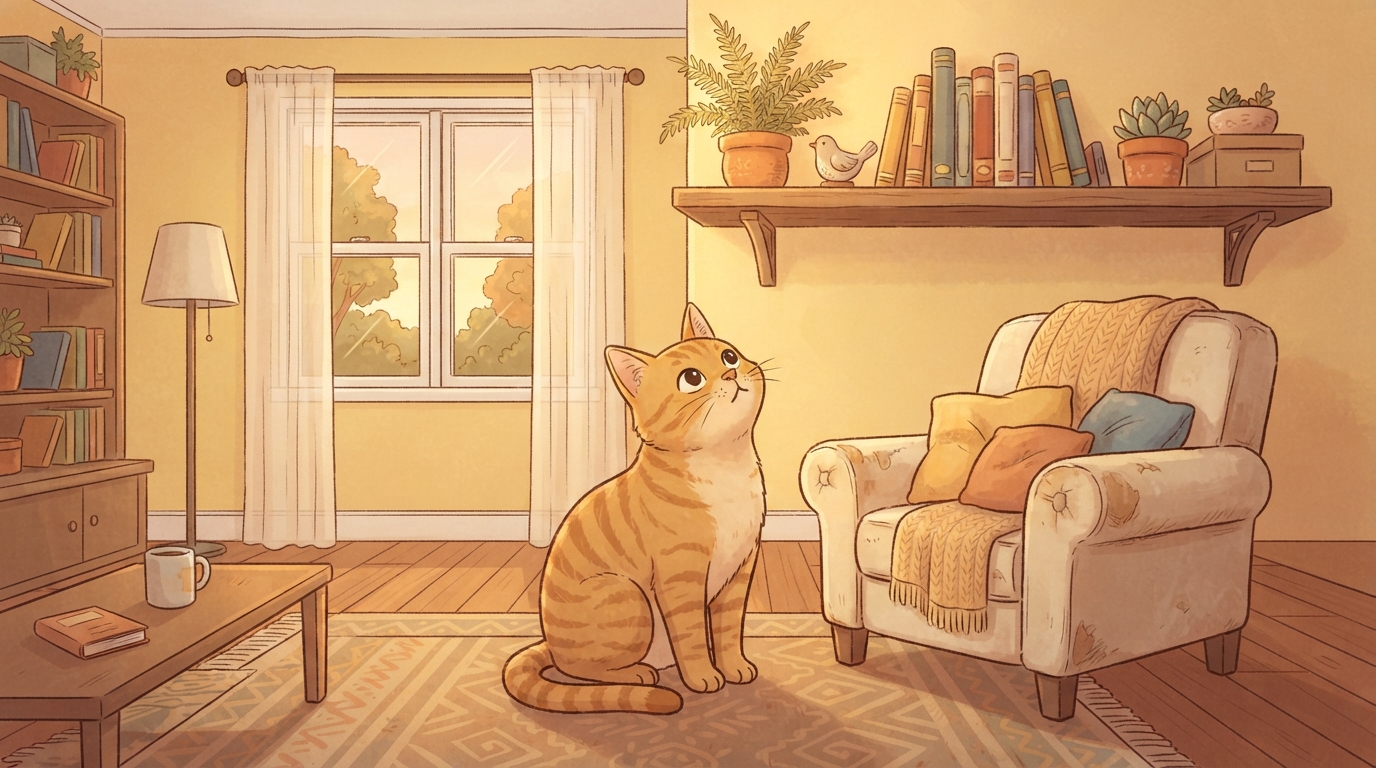
A cat-proofed living room with cables tucked away, a secured window and a cat looking up at a high shelf.

Cats are curious and can investigate places you might not expect.

Before bringing your cat home:

  • Secure electrical wires.
  • Store cleaning products and chemicals safely.
  • Keep human medicines out of reach.
  • Remove toxic plants.
  • Secure open windows and balconies.
  • Keep small objects that could be swallowed away.
  • Check washing machines, dryers and cupboards before closing them.

Be particularly careful with lilies. Many lily species are extremely dangerous to cats. Even exposure to pollen or vase water can cause severe poisoning.

If you suspect your cat has contacted a poisonous substance, seek veterinary advice immediately.

Chapter 3 · Preparing Your Home15

3.3 Create a Safe Room

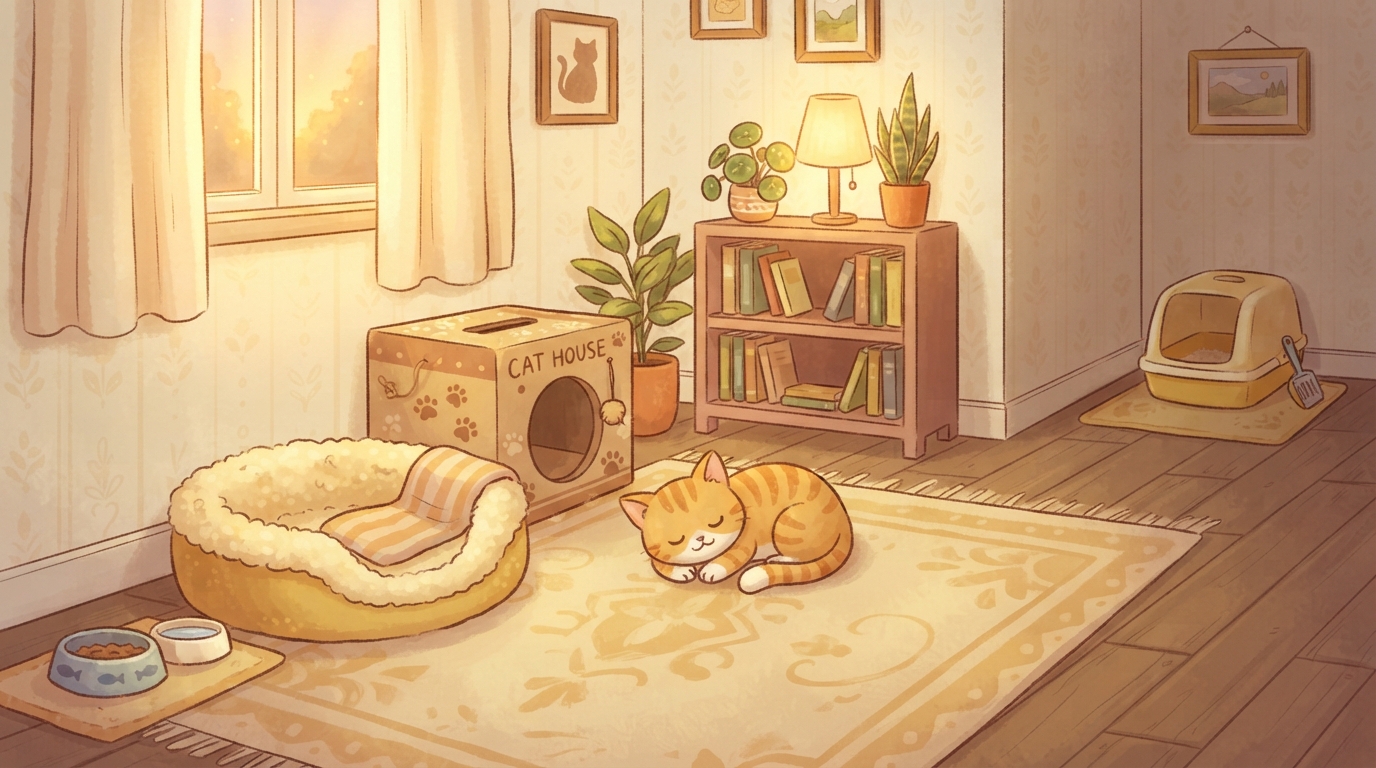
A small quiet room with a cat bed, bowls on one side, a litter box in a far corner and a hiding box.

For the first few days, consider giving your cat one quiet room.

Place its food, water, litter box, bedding and a hiding place in suitable locations.

Keep the litter box away from food and water.

Allow the cat to explore gradually instead of giving it unrestricted access to the entire house immediately.

Chapter 3 · Preparing Your Home16

CHAPTER 4

Bringing Your Cat Home

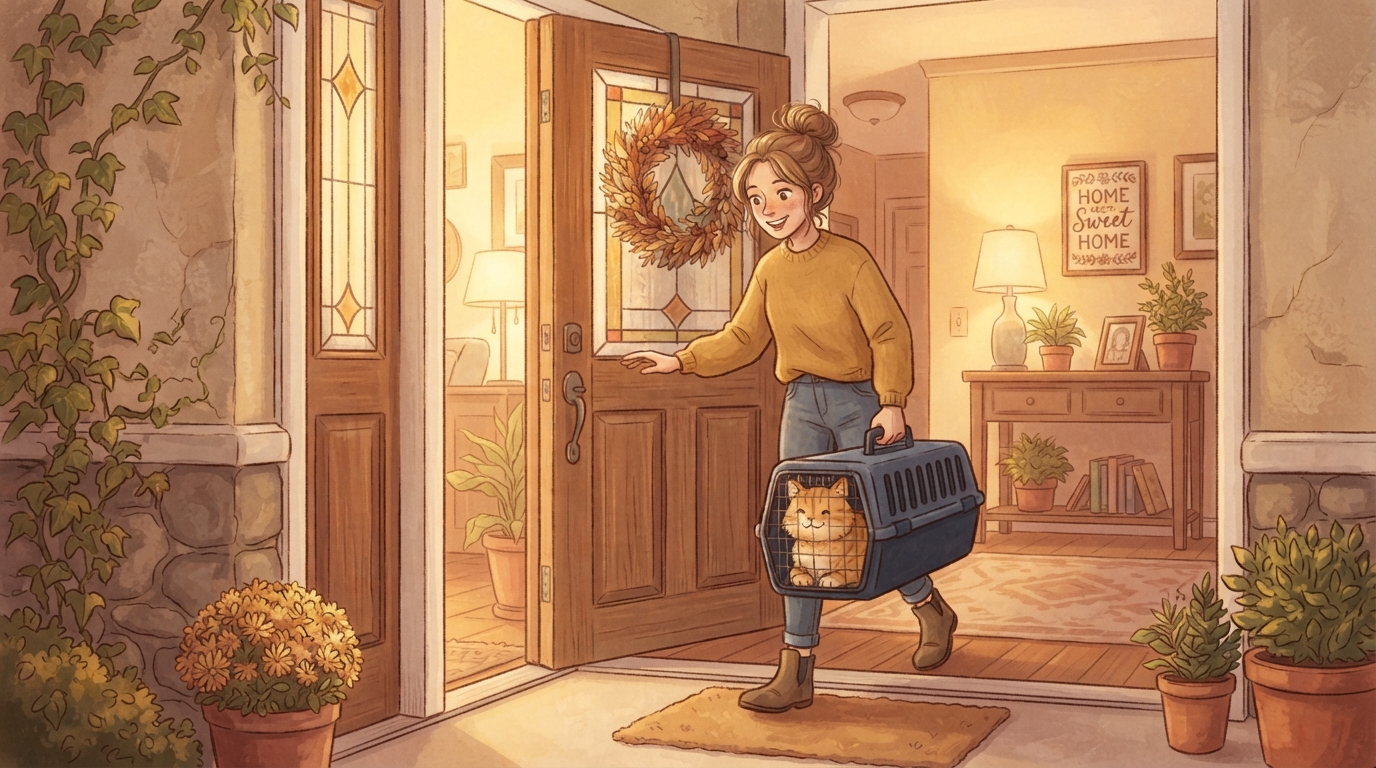
An owner carrying a cat carrier through the front door of a warm, welcoming home.

The first few days can determine how comfortable your cat feels in its new environment.

A cat that has just been moved may be frightened, confused or unusually quiet.

This is normal for many cats.

Chapter 4 · Bringing Your Cat Home17

4.1 The First Day

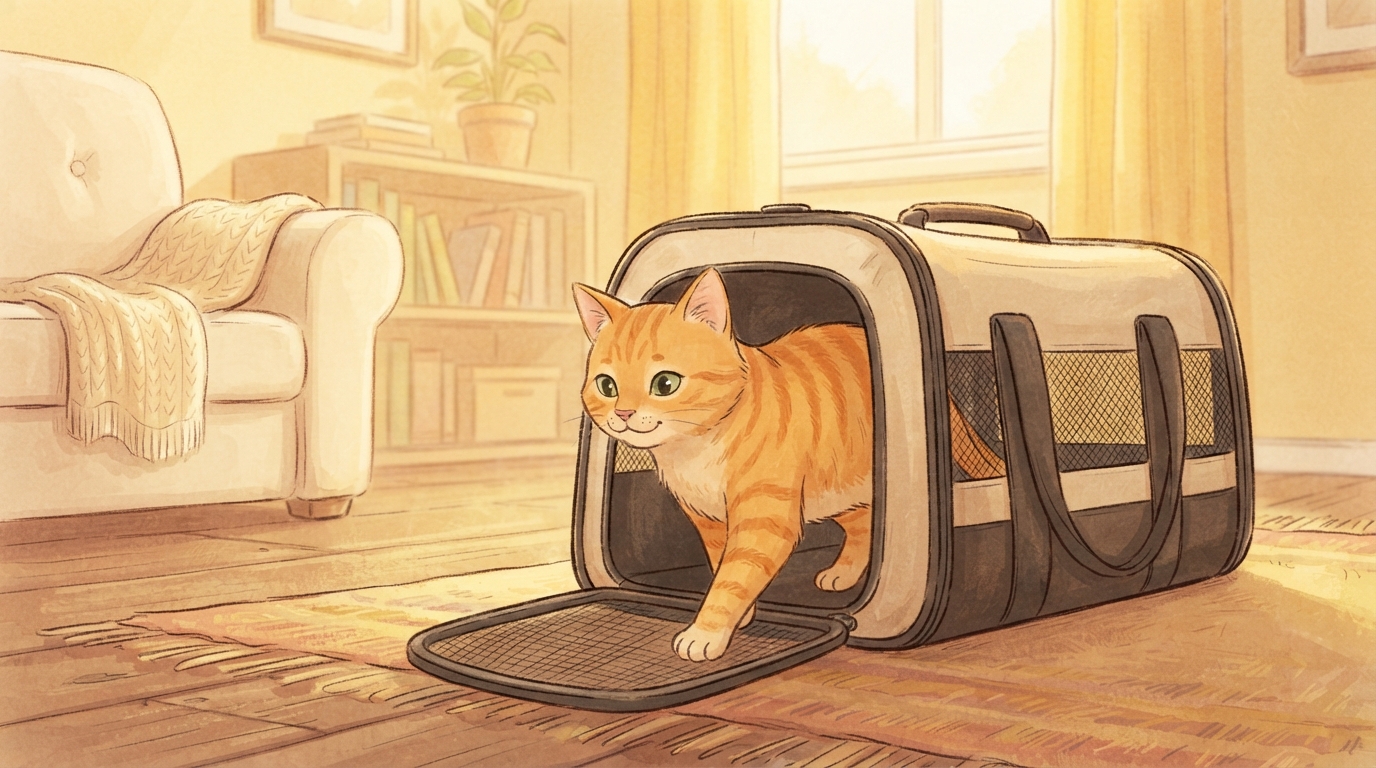
An open carrier on the floor of a quiet room, a cat cautiously stepping out on its own.

Bring your cat home in a secure carrier.

Take it to the prepared room and open the carrier. Allow the cat to come out voluntarily.

Do not pull it out or force it to explore.

Show it where the litter box, food and water are located.

Then give it time.

Some cats begin exploring within minutes. Others may hide for hours or even longer.

Let your cat adjust at its own pace.

Chapter 4 · Bringing Your Cat Home18

4.2 Give Your Cat Time to Trust You

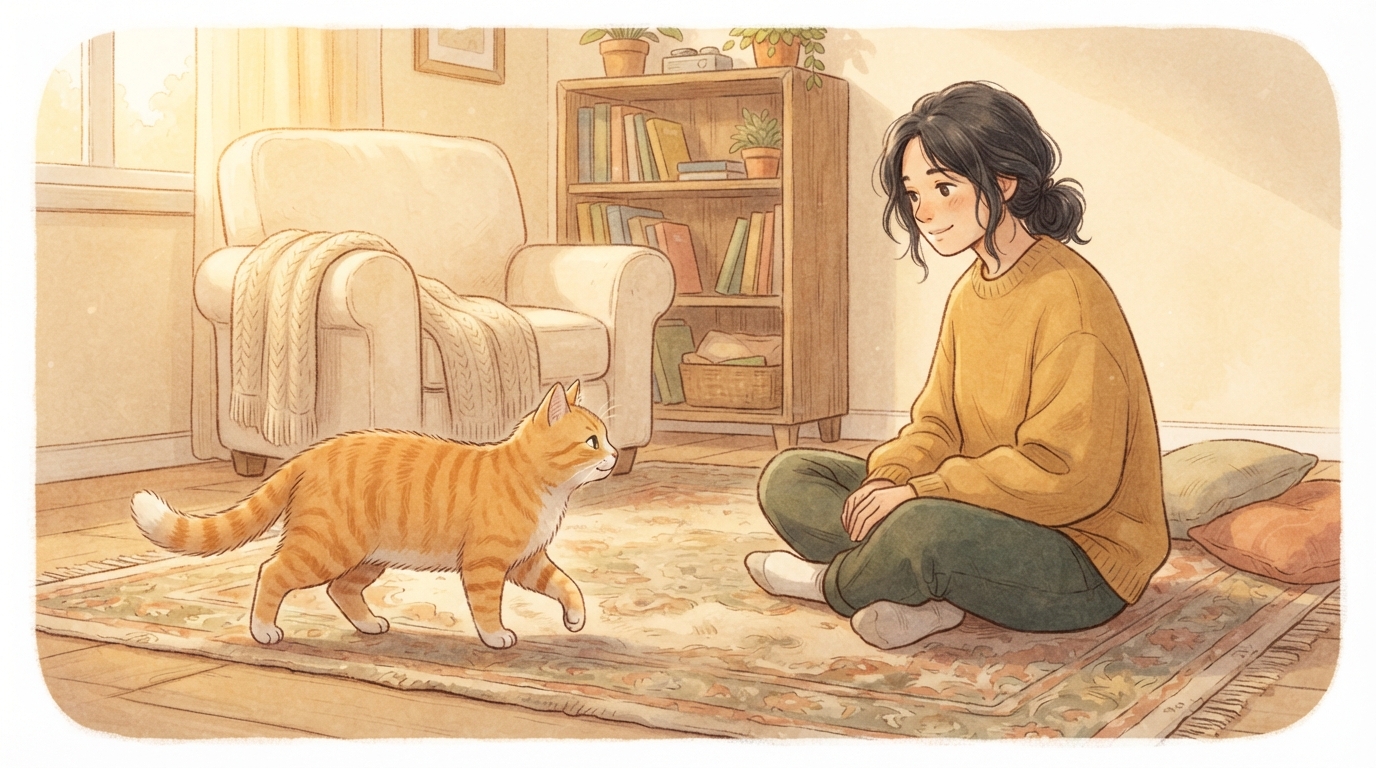
An owner sitting on the floor at a respectful distance while a cat slowly approaches.

Trust develops through consistent, positive experiences.

Try these simple habits:

  • Speak in a calm voice.
  • Avoid sudden movements.
  • Sit near your cat without forcing contact.
  • Offer appropriate treats.
  • Play gently with interactive toys.
  • Let the cat approach you first.

Avoid chasing your cat or repeatedly picking it up when it is uncomfortable.

Chapter 4 · Bringing Your Cat Home19

4.3 Introducing Other Pets

A cat and a dog looking at each other calmly through a baby gate.

If you already have animals, do not immediately place the new cat in the same room with them.

Start with separate spaces.

Allow them to become familiar with each other's scent before introducing them visually and physically.

Keep early interactions short and supervised.

Some animals adjust quickly. Others need several days or weeks.

Never force an interaction that is causing serious fear or aggression.

Chapter 4 · Bringing Your Cat Home20

4.4 The First Veterinary Visit

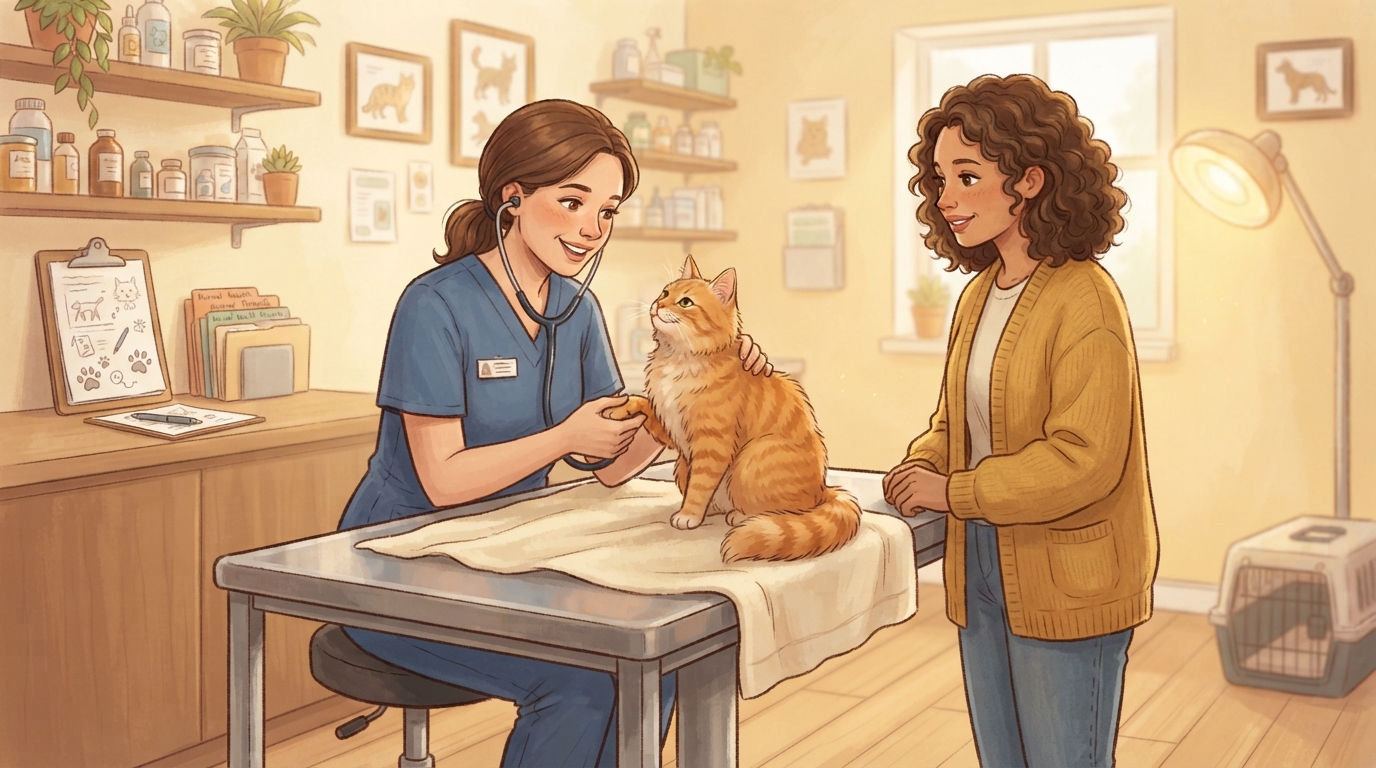
A vet and an owner with a cat on an examination table, a clipboard and health records nearby.

Arrange a veterinary examination soon after bringing your cat home.

Bring any available health records.

Ask the veterinarian about:

  • General health examination.
  • Vaccination history.
  • Flea and tick prevention.
  • Internal parasite control.
  • Appropriate food.
  • Microchipping or identification.
  • Spaying or neutering.
  • Dental health.

If your new cat has an unknown health history and you already own other cats, ask your veterinarian about keeping the newcomer separated until it has been examined and any recommended testing has been completed.

Chapter 4 · Bringing Your Cat Home21

CHAPTER 5

Feeding and Nutrition

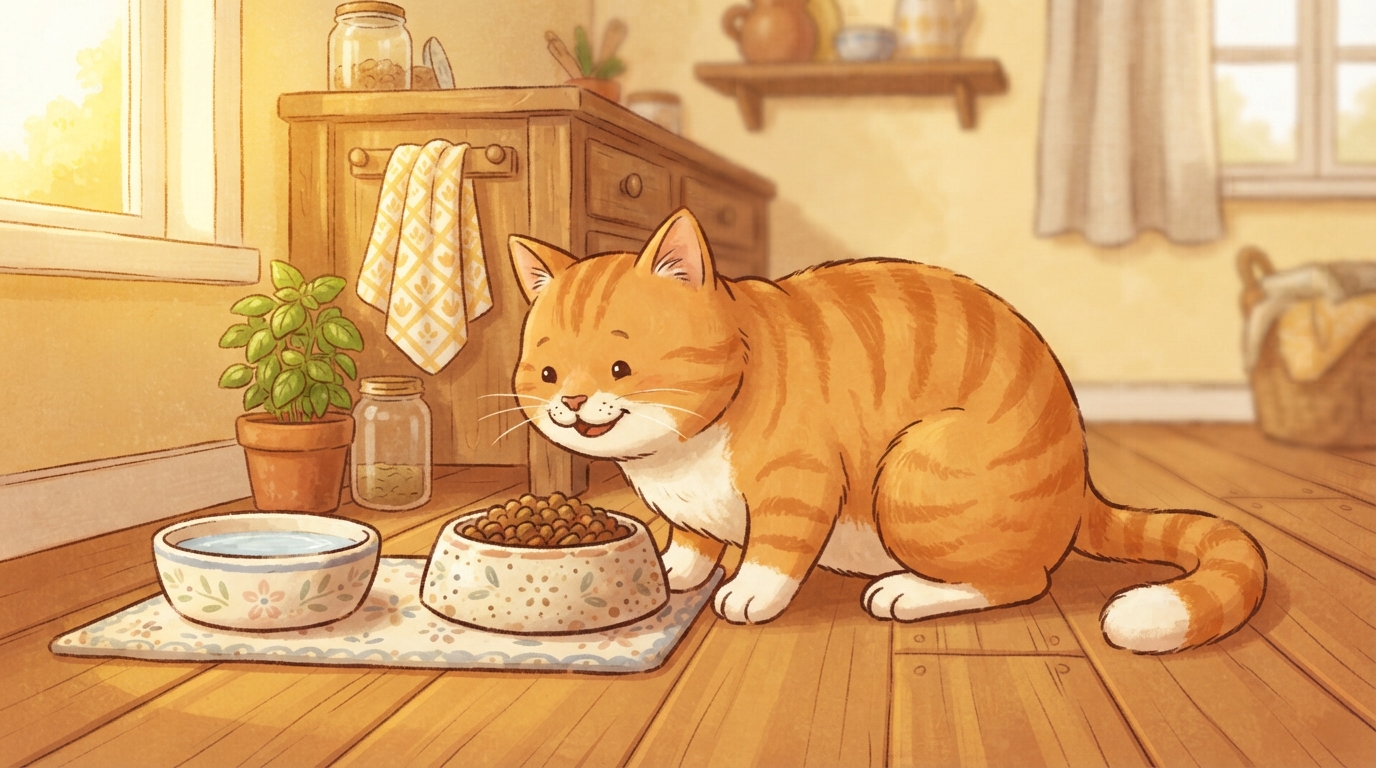
A cat eating from a bowl on a kitchen floor, a water bowl beside it.

Food is one of the most important parts of cat care.

Cats need the correct balance of nutrients to maintain healthy muscles, organs, bones, skin and fur.

Chapter 5 · Feeding and Nutrition22

5.1 Cats Are Carnivores

Cats are obligate carnivores. This means they depend on nutrients found in animal-based foods.

They require nutrients such as:

  • Protein.
  • Fat.
  • Taurine.
  • Essential fatty acids.
  • Vitamins.
  • Minerals.
  • Water.

A complete and balanced commercial cat food is usually the simplest way to meet these nutritional requirements.

Dog food is not an appropriate long-term replacement for cat food because cats have different nutritional needs.

Chapter 5 · Feeding and Nutrition23

5.2 Wet Food or Dry Food?

Both can be suitable when they are nutritionally complete and appropriate for the cat's life stage.

Wet food

Advantages include:

  • Higher moisture content.
  • Often easier for some cats to eat.
  • Many cats enjoy its texture and smell.

Dry food

Advantages include:

  • Convenient storage.
  • Easy portion measurement.
  • Can be convenient for feeding routines.

Some owners use a combination of both.

Choose based on your cat's needs, preferences and veterinary advice.

Chapter 5 · Feeding and Nutrition24

5.3 Feeding Kittens

Kittens grow quickly and need food designed specifically for growth.

They generally need more frequent meals than adult cats.

A useful general starting point is:

  • Very young kittens: several small meals throughout the day.
  • Kittens under four months: commonly three to four meals daily.
  • Older kittens: gradually adjust feeding frequency as they grow.

Follow the food manufacturer's feeding guidance and ask your veterinarian to assess the correct amount.

Do not give very young kittens ordinary cow's milk as a replacement for their mother's milk or appropriate kitten formula.

Chapter 5 · Feeding and Nutrition25

5.4 Feeding Adult Cats

Most healthy adult cats can be fed measured meals once or twice daily, depending on their individual needs and veterinary recommendations.

Avoid repeatedly filling the bowl without measuring how much your cat eats.

Overfeeding can contribute to obesity.

Use the feeding instructions on the packaging as a starting point, then adjust based on your cat's weight, activity and body condition.

Chapter 5 · Feeding and Nutrition26

5.5 Foods to Avoid

Some foods and substances can seriously harm cats.

Never intentionally feed your cat:

  • Chocolate.
  • Onions.
  • Garlic.
  • Grapes or raisins.
  • Alcohol.
  • Caffeinated drinks.
  • Raw yeast dough.
  • Foods containing the artificial sweetener xylitol.
  • Cooked bones that can splinter.

Avoid raw meat and raw eggs because of infection risks.

Milk is also unnecessary for most adult cats. Many cats cannot digest lactose properly.

Do not assume that food is safe simply because humans can eat it.

Chapter 5 · Feeding and Nutrition27

5.6 Keep Fresh Water Available

Your cat should always have access to clean drinking water.

Wash the water bowl and refill it daily.

Some cats prefer wide, shallow bowls or water fountains.

If your cat suddenly starts drinking significantly more or less than usual, speak to a veterinarian.

Important: Never attempt to create a homemade long-term cat diet without professional nutritional guidance. An unbalanced diet can cause serious nutritional deficiencies.

Chapter 5 · Feeding and Nutrition28

CHAPTER 6

Litter Training and Toilet Habits

One of the most useful things you can teach your new cat is how to use its litter box.

The good news is that many cats naturally prefer to bury their waste.

However, the right setup is important.

Chapter 6 · Litter Training and Toilet Habits29

6.1 Choosing a Litter Box

Choose a box that is large enough for your cat to enter, turn around and dig comfortably.

For kittens and older cats, a lower entrance may make access easier.

Some cats prefer open boxes rather than covered ones.

If you are unsure, start with a simple open litter box.

Chapter 6 · Litter Training and Toilet Habits30

6.2 Where Should You Put It?

Place the litter box somewhere quiet and accessible.

Avoid placing it:

  • Beside loud appliances.
  • Next to food and water.
  • In an area with constant foot traffic.
  • Somewhere the cat can easily become trapped.

In a multi-level home, provide convenient access to litter boxes on different floors.

A useful general rule is one litter box per cat, plus one extra.

Chapter 6 · Litter Training and Toilet Habits31

6.3 Teaching Your Cat to Use It

When your cat arrives:

  1. Show it where the litter box is.
  2. Allow it to investigate.
  3. Give it privacy.
  4. Keep the box accessible.
  5. Reward calm, positive behaviour.

For a kitten, gently placing it near the litter box after meals or naps can help it learn the location.

Never punish a cat for having an accident.

Chapter 6 · Litter Training and Toilet Habits32

6.4 Keeping the Litter Box Clean

Cats are generally clean animals and may avoid a dirty litter box.

A simple cleaning routine:

  • Remove waste at least once daily.
  • Replace litter as needed.
  • Wash the box regularly.
  • Use mild, pet-safe cleaning products.
  • Avoid strong fragrances.
Chapter 6 · Litter Training and Toilet Habits33

6.5 What If Your Cat Stops Using the Litter Box?

Do not immediately assume your cat is being difficult.

Possible reasons include:

  • A dirty litter box.
  • An inconvenient location.
  • A change in litter type.
  • Stress or fear.
  • Conflict with another animal.
  • Urinary or digestive problems.

A cat that repeatedly strains to urinate, cries while attempting to urinate or produces little or no urine needs urgent veterinary assessment. A urinary blockage can be life-threatening, especially in male cats.

Never ignore this situation.

Chapter 6 · Litter Training and Toilet Habits34

CHAPTER 7

Grooming and Hygiene

Keeping your cat clean is part of maintaining its health.

Fortunately, cats spend a lot of time grooming themselves.

However, they still need help with certain hygiene tasks.

Chapter 7 · Grooming and Hygiene35

7.1 Brushing Your Cat

Regular brushing helps remove loose hair, reduce tangles and keep the coat in good condition.

Short-haired cats may need less frequent brushing than long-haired cats.

Start gently and use a suitable brush.

If your cat dislikes brushing, try short sessions and reward calm behaviour.

Chapter 7 · Grooming and Hygiene36

7.2 Bathing

Most healthy cats do not require frequent baths.

They generally clean themselves.

Bathing may be necessary when a cat becomes unusually dirty or has a substance on its fur that cannot be safely removed by ordinary grooming.

Use a cat-safe shampoo when bathing is appropriate.

Never use human shampoo or household cleaning products.

If the substance on the fur could be toxic, contact a veterinarian before attempting to clean it yourself.

Chapter 7 · Grooming and Hygiene37

7.3 Nail Care

A cat's claws grow continuously.

Provide scratching posts and surfaces so your cat can scratch naturally.

Some cats also need occasional nail trimming.

If you trim the nails yourself:

  • Use proper pet nail clippers.
  • Trim only the sharp tip.
  • Avoid the pink area inside the claw, known as the quick.
  • Stop if your cat becomes distressed.

Ask a veterinarian or trained groomer to demonstrate the process if you are unsure.

Never declaw your cat as a routine solution to scratching furniture. Provide appropriate scratching alternatives instead.

Chapter 7 · Grooming and Hygiene38

7.4 Ear and Eye Care

Check your cat's eyes and ears regularly.

Look for unusual discharge, redness, swelling or unpleasant smells.

Do not insert cotton buds or other objects deep into the ears.

Persistent discharge, squinting or eye pain requires veterinary attention.

Chapter 7 · Grooming and Hygiene39

7.5 Dental Care

Dental health is often overlooked by new cat owners.

Plaque and dental disease can cause discomfort and affect eating.

Where possible, introduce tooth brushing gradually using a cat-specific toothbrush and toothpaste.

Never use human toothpaste on your cat.

Ask your veterinarian to examine your cat's teeth during routine check-ups.

Chapter 7 · Grooming and Hygiene40

CHAPTER 8

Understanding Cat Behaviour

Understanding your cat's behaviour will help you build a better relationship.

Many behaviours that seem strange to humans are completely natural for cats.

Chapter 8 · Understanding Cat Behaviour41

8.1 Why Does My Cat Scratch Furniture?

Scratching is a natural behaviour.

Cats scratch to:

  • Remove old outer claw layers.
  • Stretch their muscles.
  • Mark their territory.
  • Leave scent signals.

Instead of punishing your cat, provide scratching posts or boards.

Place them near areas where your cat already likes to scratch.

Reward your cat when it uses the appropriate surface.

Chapter 8 · Understanding Cat Behaviour42

8.2 Why Does My Cat Bite Me?

There are several possible reasons.

Play biting: Young cats often use their mouths during play.

Overstimulation: Some cats become uncomfortable after too much petting.

Fear: A frightened cat may bite to defend itself.

Pain: A cat that suddenly becomes aggressive when touched may be experiencing discomfort.

Avoid using your hands as toys.

Use toys that create a safe distance between your hands and your cat's teeth.

If biting behaviour starts suddenly or becomes severe, consult a veterinarian.

Chapter 8 · Understanding Cat Behaviour43

8.3 Why Does My Cat Knead Blankets?

Kneading happens when a cat pushes its paws alternately against a soft surface.

Kittens knead while nursing, and many adult cats continue doing it.

It is commonly associated with comfort and relaxation.

Allow your cat to knead a blanket if it enjoys doing so.

Chapter 8 · Understanding Cat Behaviour44

8.4 Why Does My Cat Bring Me Dead Animals?

Cats have natural hunting instincts.

Even well-fed cats may chase insects, birds or small animals.

This behaviour is not necessarily a sign that your cat is hungry.

Keep your cat safely entertained with interactive toys and supervised play.

Chapter 8 · Understanding Cat Behaviour45

8.5 Why Does My Cat Meow So Much?

Cats use vocal sounds to communicate with humans and other animals.

Your cat may meow because it wants:

  • Food.
  • Attention.
  • Playtime.
  • Access to another room.
  • Help or reassurance.

A sudden change in vocalisation, particularly in an older cat, should be discussed with a veterinarian.

Chapter 8 · Understanding Cat Behaviour46

8.6 Never Use Physical Punishment

Hitting, shouting or frightening a cat does not teach it good behaviour.

It can damage trust and increase fear or aggression.

Instead, identify why the behaviour is happening and provide an appropriate alternative.

Chapter 8 · Understanding Cat Behaviour47

CHAPTER 9

Health, Vaccinations and Veterinary Care

Your cat cannot tell you when something is wrong.

That is why regular observation and veterinary care are essential.

Chapter 9 · Health, Vaccinations and Veterinary Care48

9.1 Routine Veterinary Visits

Arrange regular health examinations with a qualified veterinarian.

A new cat should receive an initial examination, even if it appears healthy.

Your veterinarian can advise on:

  • Vaccinations.
  • Parasite prevention.
  • Weight management.
  • Dental health.
  • Diet.
  • Reproductive health.
  • Age-related health concerns.

Healthy adult cats commonly need at least annual examinations, although senior cats and cats with medical conditions may need more frequent visits.

Chapter 9 · Health, Vaccinations and Veterinary Care49

9.2 Vaccinations

Vaccines help protect cats against serious infectious diseases.

Common feline vaccines include those protecting against:

  • Feline panleukopenia.
  • Feline herpesvirus.
  • Feline calicivirus.
  • Rabies, where recommended or required.

Other vaccines may be appropriate depending on your cat's age, health, lifestyle and exposure risk.

Kittens generally require a series of vaccinations rather than just one injection.

The exact schedule varies, so follow your veterinarian's instructions and maintain vaccination records.

Do not assume a cat is fully vaccinated simply because a previous owner says it received an injection.

Chapter 9 · Health, Vaccinations and Veterinary Care50

9.3 Parasite Prevention

Cats can be affected by parasites such as:

  • Fleas.
  • Ticks.
  • Ear mites.
  • Intestinal worms.

Some parasites can cause itching, skin irritation, digestive problems and other health complications.

Ask your veterinarian which parasite prevention products are suitable.

Never use a dog flea treatment on a cat unless a veterinarian has specifically confirmed that the product is safe. Some dog products contain ingredients that are highly toxic to cats.

Chapter 9 · Health, Vaccinations and Veterinary Care51

9.4 Signs Your Cat May Be Sick

Watch for changes such as:

  • Refusing food.
  • Repeated vomiting.
  • Persistent diarrhoea.
  • Unusual tiredness.
  • Weight loss.
  • Excessive thirst.
  • Difficulty breathing.
  • Persistent coughing or sneezing.
  • Changes in urination.
  • Unusual hiding or aggression.
  • Problems walking.

A single mild symptom may have several possible explanations, but persistent or worsening symptoms need veterinary assessment.

Chapter 9 · Health, Vaccinations and Veterinary Care52

9.5 Emergency Warning Signs

Seek urgent veterinary help if your cat:

  • Struggles to breathe.
  • Cannot urinate or repeatedly strains without producing urine.
  • Collapses or becomes unresponsive.
  • Has a seizure.
  • Suffers major bleeding or serious injury.
  • May have swallowed poison.
  • Has severe or sudden weakness.

Do not wait to see whether a serious emergency resolves by itself.

Chapter 9 · Health, Vaccinations and Veterinary Care53

9.6 Spaying and Neutering

Spaying and neutering are surgical procedures that prevent reproduction.

They can also reduce certain reproductive behaviours and prevent some reproductive health problems.

Discuss the appropriate timing, benefits and risks with your veterinarian.

Chapter 9 · Health, Vaccinations and Veterinary Care54

CHAPTER 10

Raising Kittens

Kittens are adorable, energetic and curious.

They also require extra care because their bodies and behaviour are still developing.

Chapter 10 · Raising Kittens55

10.1 Feeding a Growing Kitten

Kittens need food specifically formulated for growth.

They require sufficient calories, protein, vitamins and minerals.

Feed according to age, body condition and veterinary guidance.

Very young kittens that have lost their mother may need specialist care and kitten milk replacer.

Never use ordinary cow's milk as a substitute.

Chapter 10 · Raising Kittens56

10.2 Socialisation

Early positive experiences help kittens become more comfortable with people and their surroundings.

Introduce them gradually to:

  • Gentle handling.
  • Everyday household sounds.
  • Different surfaces.
  • Appropriate toys.
  • Grooming.
  • Their carrier.
  • Friendly visitors.

Do not overwhelm a kitten with too many new experiences at once.

Chapter 10 · Raising Kittens57

10.3 Play and Exercise

Kittens have lots of energy.

Provide toys that encourage chasing, jumping and exploring.

Use supervised play sessions throughout the day.

Avoid toys with loose strings, ribbons or small parts that could be swallowed.

Never leave a kitten unsupervised with potentially dangerous toys.

Chapter 10 · Raising Kittens58

10.4 Sleeping

Kittens need plenty of rest.

Provide a warm, quiet and comfortable sleeping area.

Do not repeatedly wake a kitten to play.

Chapter 10 · Raising Kittens59

10.5 Veterinary Care for Kittens

Young kittens need a planned programme of veterinary examinations, vaccinations and parasite prevention.

Ask about:

  • Initial health examination.
  • Vaccine schedule.
  • Deworming.
  • Flea prevention.
  • Nutrition.
  • Identification.
  • Spaying or neutering.

Keep all medical records in one place.

Chapter 10 · Raising Kittens60

CHAPTER 11

Keeping Indoor Cats Happy and Safe

An indoor cat can live a comfortable and stimulating life, but its environment needs to provide opportunities for natural behaviour.

Simply leaving food and water in a room is not enough.

Chapter 11 · Keeping Indoor Cats Happy and Safe61

11.1 Provide Daily Playtime

Play allows cats to practise their natural hunting behaviours.

Use toys that encourage your cat to stalk, chase and pounce.

Examples include:

  • Wand toys.
  • Lightweight balls.
  • Puzzle feeders.
  • Cat tunnels.
  • Interactive toys.

Allow your cat to catch the toy occasionally so that play feels rewarding.

Chapter 11 · Keeping Indoor Cats Happy and Safe62

11.2 Give Your Cat Places to Climb

Cats often enjoy elevated spaces where they can observe their surroundings.

Consider:

  • Cat trees.
  • Stable shelves.
  • Window perches.
  • Safe climbing furniture.

Make sure climbing areas are secure and cannot fall over.

Chapter 11 · Keeping Indoor Cats Happy and Safe63

11.3 Prevent Boredom

A bored cat may become destructive, restless or overweight.

Rotate toys rather than leaving every toy available all the time.

Use puzzle feeders or hide small portions of food around safe areas to encourage exploration.

Chapter 11 · Keeping Indoor Cats Happy and Safe64

11.4 Indoor or Outdoor Living?

Outdoor environments expose cats to risks such as:

  • Traffic.
  • Other animals.
  • Infectious diseases.
  • Parasites.
  • Poisonous substances.
  • Getting lost.

Indoor living with appropriate enrichment can reduce many of these risks.

If you want your cat to experience the outdoors, discuss safe options such as supervised harness walks or secure outdoor enclosures.

Never assume an outdoor cat will automatically know how to avoid danger.

Chapter 11 · Keeping Indoor Cats Happy and Safe65

11.5 Keep Your Cat Identifiable

Consider microchipping your cat and keeping its identification details updated.

A properly fitted breakaway collar with an identification tag can provide another layer of protection.

Chapter 11 · Keeping Indoor Cats Happy and Safe66

CHAPTER 12

Common Mistakes Every New Cat Owner Should Avoid

Even people with good intentions can make mistakes when caring for their first cat.

Here are some common ones to avoid.

Chapter 12 · Common Mistakes Every New Cat Owner Should Avoid67

Mistake 1: Feeding Too Much

Giving your cat unlimited food without monitoring its weight can contribute to obesity.

Measure portions and monitor body condition.

Chapter 12 · Common Mistakes Every New Cat Owner Should Avoid68

Mistake 2: Giving Cow's Milk

Many cats cannot digest lactose properly.

Provide fresh water instead.

Chapter 12 · Common Mistakes Every New Cat Owner Should Avoid69

Mistake 3: Ignoring Veterinary Visits

A cat can appear healthy while having an underlying medical problem.

Regular veterinary examinations are important.

Chapter 12 · Common Mistakes Every New Cat Owner Should Avoid70

Mistake 4: Punishing Natural Behaviour

Scratching, climbing and hunting are natural cat behaviours.

Provide appropriate outlets rather than using punishment.

Chapter 12 · Common Mistakes Every New Cat Owner Should Avoid71

Mistake 5: Changing Food Suddenly

Sudden diet changes may cause digestive upset.

When changing food, gradually introduce the new food over several days, unless your veterinarian advises otherwise.

Chapter 12 · Common Mistakes Every New Cat Owner Should Avoid72

Mistake 6: Leaving Dangerous Objects Around

Small objects, electrical cables, chemicals and toxic plants can put your cat at risk.

Make home safety part of your regular routine.

Chapter 12 · Common Mistakes Every New Cat Owner Should Avoid73

Mistake 7: Ignoring Changes in Behaviour

A cat that suddenly hides, stops eating or becomes unusually aggressive may be experiencing stress or illness.

Pay attention to changes and seek veterinary advice when needed.

Chapter 12 · Common Mistakes Every New Cat Owner Should Avoid74

Mistake 8: Forcing Affection

Not every cat enjoys being carried or hugged.

Respect your cat's boundaries and allow trust to develop naturally.

Chapter 12 · Common Mistakes Every New Cat Owner Should Avoid75

Mistake 9: Leaving a Cat Without a Care Plan

Cats need daily food, fresh water, clean litter and attention.

Arrange a responsible caregiver whenever you travel.

Chapter 12 · Common Mistakes Every New Cat Owner Should Avoid76

Mistake 10: Treating Internet Advice as a Diagnosis

Online information can help you learn, but it cannot replace a physical examination by a veterinarian.

When in doubt, seek professional help.

Chapter 12 · Common Mistakes Every New Cat Owner Should Avoid77

BONUS 1

The First-Time Cat Owner Checklist

Use this checklist before bringing your cat home.

Bonus 1 · The First-Time Cat Owner Checklist78

Essential Supplies

Bonus 1 · The First-Time Cat Owner Checklist79

Home Preparation

Bonus 1 · The First-Time Cat Owner Checklist80

Health Preparation

Bonus 1 · The First-Time Cat Owner Checklist81

BONUS 2

A Simple Daily Cat Care Routine

You do not need an overly complicated schedule to care for your cat.

Consistency is what matters.

Bonus 2 · A Simple Daily Cat Care Routine82

Morning

  • Provide fresh food according to the feeding plan.
  • Refresh the water bowl.
  • Scoop the litter box.
  • Check that your cat appears healthy.
  • Spend a few minutes playing together.
Bonus 2 · A Simple Daily Cat Care Routine83

Afternoon

  • Check the water supply.
  • Offer interaction or supervised play when possible.
  • Make sure your cat has a comfortable resting place.
Bonus 2 · A Simple Daily Cat Care Routine84

Evening

  • Provide the next planned meal.
  • Scoop the litter box.
  • Spend time playing with your cat.
  • Check its general behaviour.
  • Make sure the home is safe for the night.

Adjust the routine for your cat's age, health and individual needs.

Bonus 2 · A Simple Daily Cat Care Routine85

BONUS 3

What to Do in a Cat Emergency

When an emergency happens, staying calm can help you act quickly.

  1. Move your cat away from immediate danger if it is safe to do so.
  2. Contact a veterinary clinic or emergency veterinarian.
  3. Describe the symptoms and when they started.
  4. Follow the veterinarian's instructions.
  5. Transport your cat securely in a carrier.
  6. Bring any relevant packaging if poisoning is suspected.

Never induce vomiting or administer human medication unless specifically instructed by a veterinarian.

Keep emergency veterinary contact information somewhere accessible.

Bonus 3 · What to Do in a Cat Emergency86

FINAL WORD

Your Journey as a Cat Owner Starts Here

Owning a cat is not about being a perfect pet owner.

It is about learning, paying attention and making responsible decisions every day.

Your cat may take time to trust you. It may scratch furniture, knock things over or wake you up earlier than you would like. It may have a personality completely different from what you expected.

Be patient.

Give it a safe home, nutritious food, clean water, proper healthcare and opportunities to play and explore.

Most importantly, remember that your cat depends on you.

The small things you do consistently can make a significant difference to its quality of life.

A happy cat starts with an informed and responsible owner.

Thank you for reading, and welcome to the wonderful world of cats!

Final Word · Your Journey as a Cat Owner Starts Here87

Recommended Further Reading

The following veterinary and animal welfare organisations provide additional information for cat owners:

  1. Cornell University College of Veterinary Medicine — Feline Health Center: https://www.vet.cornell.edu/departments-centers-and-institutes/cornell-feline-health-center
  2. American Society for the Prevention of Cruelty to Animals (ASPCA): https://www.aspca.org/pet-care/cat-care
  3. American Veterinary Medical Association (AVMA): https://www.avma.org/resources/pet-owners
  4. American Animal Hospital Association (AAHA): https://www.aaha.org/

Always consult a qualified veterinarian for advice about your individual cat.

Further Reading88

The Complete Beginner's Guide to Raising a Happy, Healthy Cat

A happy cat starts with an informed and responsible owner.

Written by